5 Signs Your Brand No Longer Tells Your Story (And What to Do About It)
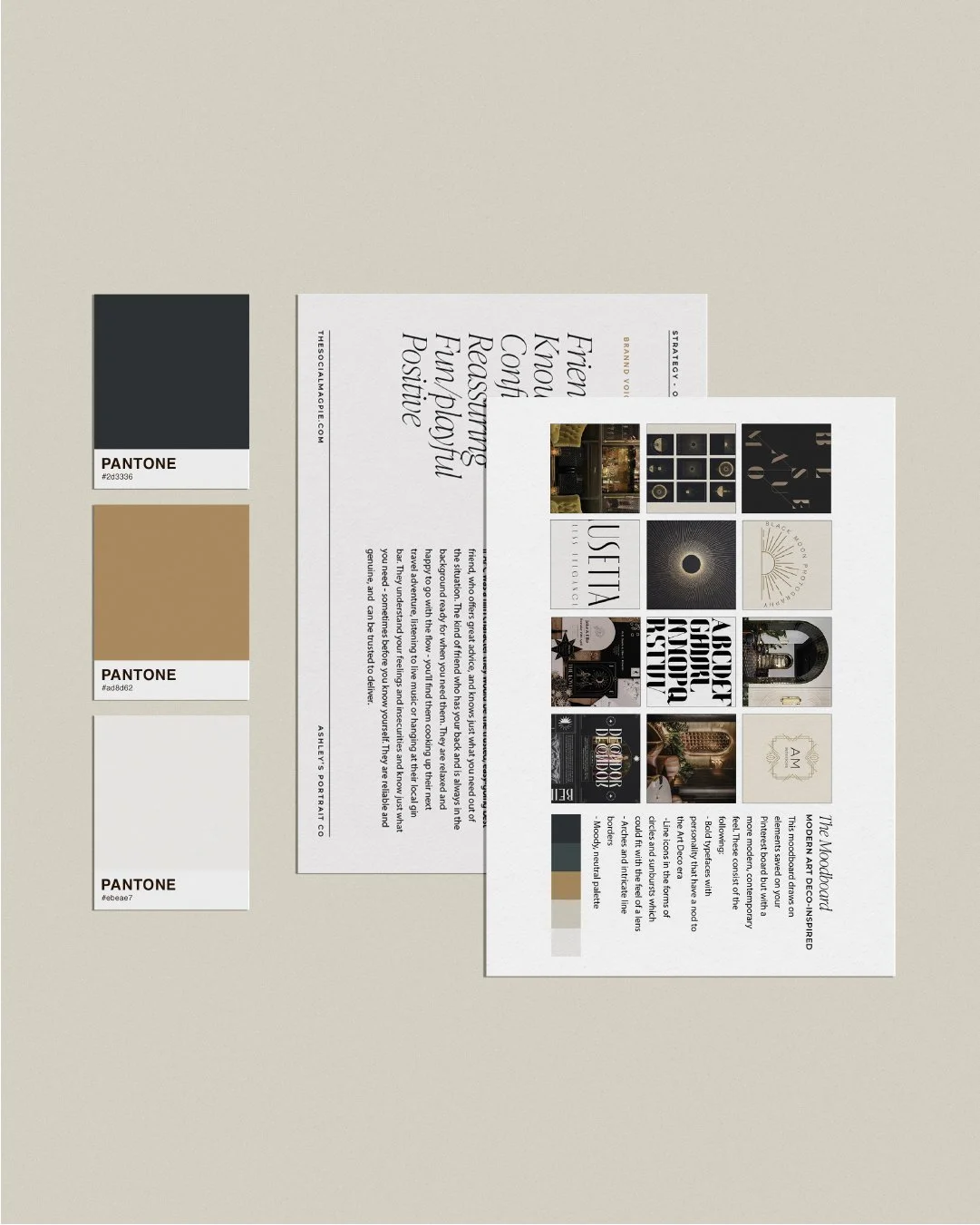
There's a particular kind of discomfort that creeps in when your brand no longer fits.
You've grown. Your work has evolved. You're clearer than ever about who you are, what you do, and who you want to attract. But every time you share your website or hand over a business card, something feels slightly off. Not dramatically wrong, just not quite right.
That feeling is worth paying attention to.
A brand isn't a fixed thing. It's a story, and stories evolve as the people and businesses behind them evolve. When your brand stops telling the right story, it doesn't just look a bit tired. It quietly works against you, attracting the wrong enquiries, underselling your worth, and making it harder for the right clients to find and choose you.
Here are five signs your brand is no longer telling your story, and what to do if you recognise yourself in any of them.
1. You feel embarrassed to share your website
This is the most common thing I hear from creative business owners when they first get in touch with me. They'll mention, almost in passing, that they've stopped sharing their website link. That they hesitate before sending someone to their Instagram. That they've turned down opportunities because they didn't feel ready to be seen.
If your brand isn't something you're proud to put in front of people, that's a significant problem. Not because vanity matters, but because confidence does. The clients you want to attract can sense hesitation, and a brand that doesn't reflect your expertise makes it harder to ask for the prices your work deserves.
Your brand should make you want to show it off. If it doesn't, that's a clear sign something needs to change.
2. You're attracting the wrong enquiries
When a brand is doing its job, it acts as a filter. It attracts the people who are the right fit and gently signals to everyone else that they might be better served elsewhere. When a brand isn't working, that filter disappears.
If you're consistently getting enquiries from clients who push back on your prices, who aren't quite in the right place for what you offer, or who feel more like hard work than the kind of collaboration you'd love, it's worth asking whether your brand is communicating clearly enough.
A brand that tells your story with precision, that shows exactly who you are, what you believe, and who you're for, does the qualifying before you've even had a conversation.
3. Your brand looks like everyone else's in your industry
Scroll through Instagram for ten minutes in almost any creative industry and you'll see it. Neutral palettes, minimal logos, cursive script, the same mood board repeated with slight variations. It all looks fine. None of it is particularly memorable.
If your brand could belong to another business in your industry, it's not doing its job. The most memorable brands are built around something specific, a detail, a belief, a story that is uniquely and irreplaceably yours.
I worked with Alicia at Wessex Flower Co, a luxury wedding florist whose arrangements were genuinely breathtaking. The obvious brand direction would have been to lead with the flowers. But when we talked about her story, she mentioned watching her mum forage from the hedgerows as a child. Thistles, rosehips, acorns, oak leaves. That memory was woven into how she approached floristry. So instead of flowers, we built her brand identity around foraged elements.
The result is a brand that couldn't belong to any other florist. Because it came from her story, not from a mood board.
If your brand looks like a version of everyone else's, the story underneath it hasn't been found yet.

4. Your business has grown but your brand hasn't kept up
Many creative businesses launch with a brand that suits where they are at the start. Sensible, practical, good enough for now. Then the business grows. The work gets better, the clients get bigger, the prices go up. And the brand quietly stays where it was, still telling the story of who you were rather than who you've become.
This gap between your actual expertise and how your brand represents it is one of the most common reasons talented creative businesses struggle to charge what they're worth. The work justifies the price. The brand doesn't.
If your business looks noticeably different from how it did two or three years ago, your brand probably needs to catch up.
5. Something feels off but you can't say exactly why
Sometimes the feeling is hard to name. You might not be able to identify anything specifically wrong with your logo or your website. But something feels misaligned. Flat. Like the brand belongs to a version of your business that no longer quite exists.
That instinct is almost always right.
A brand that feels off usually means the story underneath it has shifted. Your values have become clearer. Your ideal client has changed. The way you approach your work has evolved. And the brand, built on an earlier version of that story, no longer quite fits.
In my experience, this is the most interesting moment to work with a client. Because the story is there, clearer than ever. It just needs someone to find it and translate it into something visual.
So what do you do about it?
If you've recognised yourself in any of the signs above, the first step isn't to book a designer. It's to get clear on your story.
What makes your business specifically and irreplaceably yours? What detail, belief, or origin sits at the heart of it that no competitor can claim? That's where a rebrand worth having begins.
If you'd like a starting point, The Brand Story Method is a free five-day email course I've put together to help creative business owners uncover exactly that. It walks you through the framework I use at the start of every client project, and by the end of it you'll have the foundation for a brand that genuinely tells your story.
And if you already know your story and you're ready to turn it into a brand and website that reflects it, I'd love to hear about your project.
Frequently Asked Questions About Rebranding Your Business
-
A brand refresh updates elements of your existing identity, a colour tweak, a tidied-up logo, a modernised font, without changing the overall direction. A rebrand starts from scratch and looks at the whole story underneath the design. If your brand feels broadly right but a little dated, a refresh might be enough. If it no longer reflects who you are or the clients you want to attract, a rebrand is worth considering.
-
If your visual identity feels solid but your website isn't converting, the issue is usually the website itself. But if your brand feels off too, updating the website without addressing the brand underneath it is like repainting a house with a shaky foundation. Get the brand right first, then the website will have something strong to work from.
-
A full brand identity project typically takes three to four weeks from start to finish, depending on the designer's process and how quickly feedback is given. If you need something faster, a Design Intensive (ten hours of focused design time across two sessions) can deliver a significant brand refresh in a much shorter timeframe.
-
If your existing clients already love what you do, a thoughtful rebrand tends to strengthen rather than confuse the relationship. You're not changing what you offer, you're presenting it more clearly. Most clients respond positively when a business they respect shows up with more confidence and clarity. The key is communicating the change rather than just quietly switching everything overnight.
-
There's no fixed rule, but most creative businesses find that their brand needs meaningful attention every four to six years, or sooner if the business has changed significantly. A brand built when you started is rarely still the right fit for where you are five years in.